
A Simple SPX 0DTE Credit Spread Strategy Using Time, Trend, and Strike Selection
SPX 0DTE trading has exploded in popularity over the past couple years, but one of the biggest problems traders run into is information overload.
Too many charts.
Too many indicators.
Too many alerts.
The result? Most traders end up glued to their screens all day trying to force trades instead of following a repeatable process.
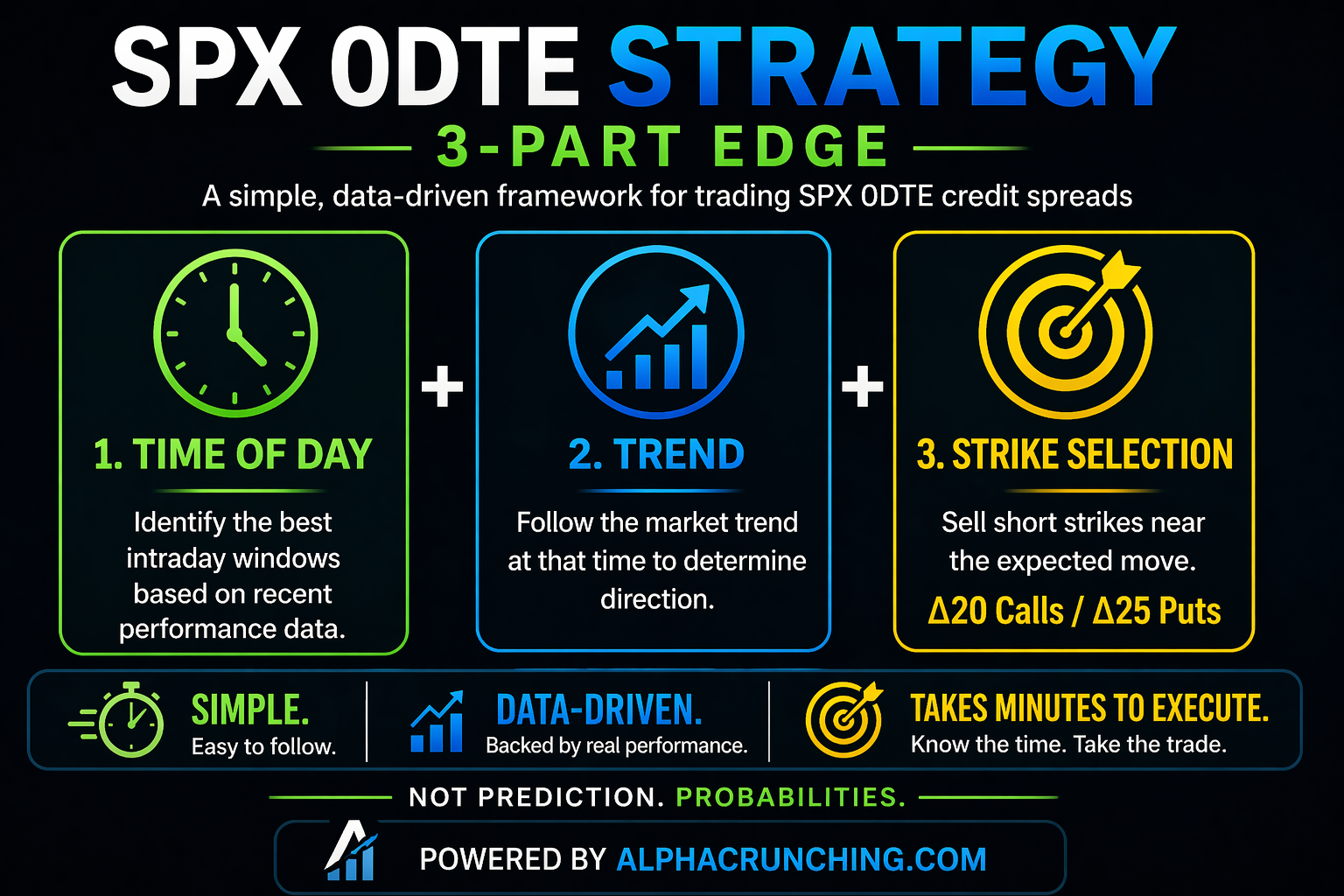
In this article, I want to walk through a simple framework we’ve been using inside Alpha Crunching that focuses on just three components:
- Time of day
- Trend
- Strike selection
The goal is to simplify the process of trading SPX 0DTE credit spreads while still using data and probabilities to guide decisions.
The 3-Part Framework
1. Time of Day
The first component is time of day.
One thing we’ve learned from tracking SPX 0DTE spreads is that not all trading windows perform equally over time.
Some timeframes consistently produce better results than others.
Inside the Trend Spread Engine (TSE), every spread generated throughout the trading day is recorded and tracked in a database. Each weekend, we analyze that data and rank the best-performing time intervals over the recent rolling period.
This creates the weekly TSE Report, which helps identify:
- The strongest timeframes
- Current high-probability levels
- Which alerts deserve the most attention during the upcoming week
For example, at the time of this recording, the 11:30am ET timeframe was holding the top performance spot.
That means instead of staring at charts all day, traders can simply focus on the highest-ranked trading window from the report.
This dramatically reduces screen time and makes the process much more structured and repeatable.
2. Trend
The second component is trend.
At the selected timeframe, the Trend Spread Engine checks the current trend of SPX using the 5-minute chart.
The framework is simple:
- Trend Up → Put Credit Spread
- Trend Down → Call Credit Spread
In the example shown in the video, the trend was down at 11:30am ET, so the strategy generated a call credit spread.
That trade eventually expired worthless.
The key idea here is that the direction is not based on prediction or opinion. The strategy simply reacts to what the market is doing in real time.
Inside the Alpha Crunching Discord server, these alerts are posted live throughout the session so traders can quickly identify:
- Direction
- Strike levels
- The timeframe being traded
Limited-Time Offer for New Members
If you'd like to follow the Trend Spread Engine report and real-time alerts yourself, you can check out Alpha Crunching here:
New members can use code:
SPX50
to get 50% OFF your first year of membership.
This includes:
- Weekly TSE reports
- SPX trade setups
- Discord alerts
- Forecast tools
- Educational content and strategy breakdowns
3. Strike Selection
The third component is strike selection.
For this framework, the short strike is typically placed near the expected move or slightly outside of it.
This usually places:
- Calls near Delta 20
- Puts near Delta 25
Most of the examples shown in the video use:
- 5-wide spreads
- Held to expiration
Of course, traders can choose to manage positions differently using:
- Stops
- Profit targets
- Risk management rules
But the base framework keeps things intentionally simple.
The idea is not to overcomplicate the process.
It’s to consistently combine:
- timing,
- trend,
- and probabilities.
Recent Performance Example
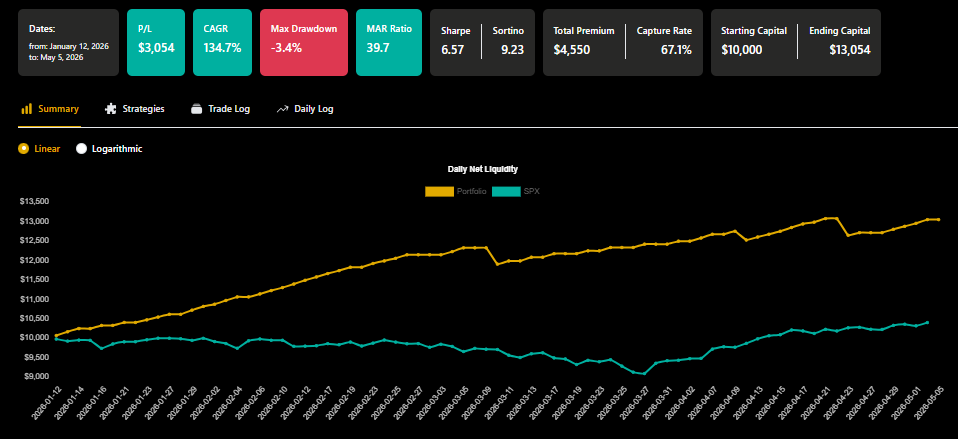
At this post, the current top-ranked 11:30am strategy was showing:
- Approximately 91% win rate
- Around $44 expectancy per spread
- Nearly $900–$1,000 per month trading one 5 wide spread at a time over the recent rolling period
Like all trading strategies, results will vary over time and market conditions can change, but the purpose of the TSE framework is to continuously track those shifts and adapt to the strongest-performing intraday windows.
Final Thoughts
What I like most about this framework is its simplicity.
You don’t need to watch charts all day.
You don’t need dozens of indicators.
You simply:
- Identify the best time of day
- Follow the trend
- Select strikes near the expected move
That’s the core idea behind this SPX 0DTE credit spread strategy.

.avif)
